
By Forcells Regenerative Medicine Editorial Team · Updated 2026-07-31
Cellular therapies use stem cells, which self-renew and differentiate into specialized cell types, to support tissue repair and regeneration. Forcells applies objective measurement and personalized treatment planning, a philosophy built by founder Dr. John P. Cole over three decades, ensuring biologically informed, evidence-driven protocols designed to produce measurable, individualized regenerative outcomes for patients.
Key Takeaways
Stem cells are immature foundation cells that divide into specialized cell types throughout the body.
Cell therapy uses living cells from patients or healthy donors to treat disease and restore function.
Some cellular therapies replace damaged cells while others guide the immune system to restore balance.
Forcells® Regenerative Medicine, located in New York, NY, specializes in cellular therapy treatments.
What Are Cellular Therapies and How Do They Work?
Cellular therapies explained in plain terms means treatment that uses living cells, drawn from a patient or a healthy donor, to help the body heal, fight illness, or restore lost function. Skipping this understanding costs patients the ability to ask informed questions before starting treatment. Every organ in the body traces back to a foundational pool of stem cells, immature cells carrying genetic instructions that determine what type of tissue they will eventually become.
Those instructions do not stay fixed forever. Through a process called differentiation, stem cells divide and specialize into the mature cell types the body actually needs at a given moment — skin, muscle, connective tissue, and beyond. This built-in flexibility is the biological engine behind every cellular treatment approach in use today.
How does cellular therapy actually work in practice?
Clinicians collect living cells, prepare them under controlled conditions, and reintroduce them to support the body’s own repair mechanisms. The goal is never random; it targets a specific tissue need identified beforehand.
What makes a cellular therapy guide from Forcells different?
A cellular therapy guide forcells-style approach treats regeneration as measured and engineered, not guesswork. Understanding the tissue’s condition always comes before attempting to change it.
That sequence — assess, then act — separates a disciplined regenerative protocol from a one-size-fits-all injection. Patients researching how cellular therapy works nyc providers apply should look for exactly that order of operations:
Tissue assessment before intervention
Cell collection and preparation from patient or donor sources
Targeted delivery matched to the specific condition
Follow-up tracking to confirm the response
Cellular therapy is not a single product or a shortcut. It is a biological process, guided by measurement, aimed at helping damaged tissue function again.
What Types of Cellular Therapies Exist Today?
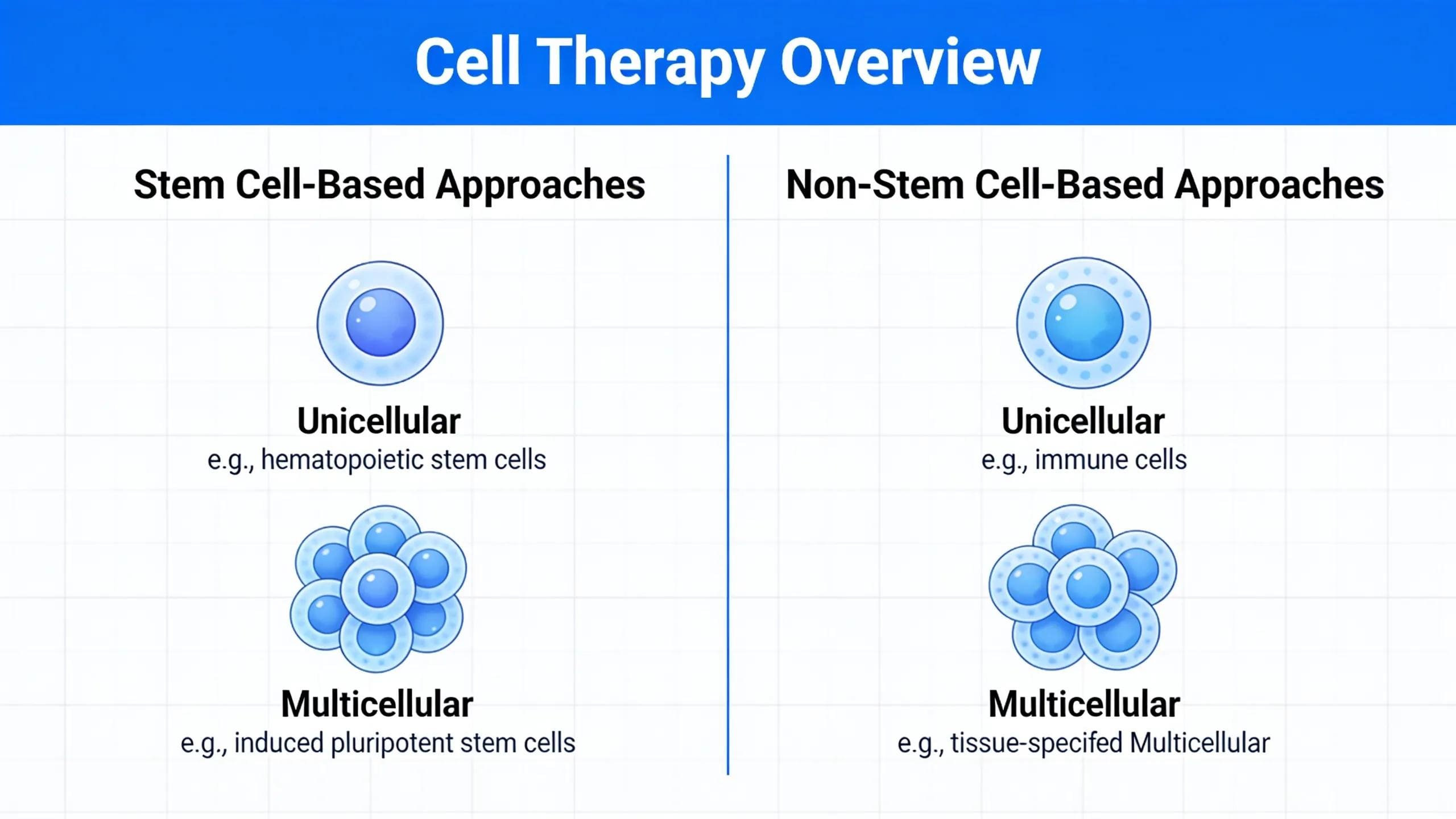
Multiple categories of cellular therapy exist, spanning stem cell-based and non-stem cell-based approaches. Cellular therapies explained at a basic level fall into unicellular and multicellular formats, each carrying distinct isolation techniques, mechanisms of action, and regulatory classifications. Patients researching options will find the landscape varied, not uniform.
Origin matters as much as category. Stem cells develop into different lineages depending on where they reside in the body. Bone marrow, for instance, houses hematopoietic stem cells responsible for generating the full range of blood cells. Other tissue sources yield stem cells suited to different repair functions entirely.
How Do These Therapies Actually Work in the Body?
Mechanism of action separates one therapy from another. Some approaches replace damaged cells outright, physically substituting healthy cells for injured tissue. Others take a different route, guiding the immune system toward restored balance rather than direct replacement.
What Makes a Cellular Therapy Guide From Forcells Different?
A cellular therapy guide forcells clients can trust starts with research-driven practice, not templated protocols. Forcells combines clinical experience with biologic science, applying advanced regenerative protocols and novel combination therapies tailored to each case.
Outcomes tracking and longitudinal care round out the approach, alongside physician-led innovation programs. Caregivers exploring how cellular therapy works nyc patients rely on will notice this same emphasis: understanding tissue biology before intervening, then measuring results afterward rather than assuming them.
How Does Forcells Approach Cellular Therapy in NYC?
Forcells Regenerative Medicine practices out of New York, NY, giving local patients a nearby resource for how cellular therapy works questions before committing to any protocol. Skipping local, in-person evaluation raises the odds of a mismatched treatment plan and wasted time. Every consultation starts with a straightforward premise: understand the tissue first, then decide what, if anything, should change.
That premise traces back to founder Dr. John P. Cole, who has spent more than three decades emphasizing objective measurement and individualized treatment planning. His influence still shapes how the practice evaluates each patient rather than applying a one-size-fits-all protocol.
What principles guide treatment decisions at Forcells?
Five principles anchor every plan: objective, measurable, personalized, evidence-driven, and biologically informed care. These principles form the backbone of this cellular therapy guide forcells patients can reference when comparing providers.
Objective — decisions rest on data, not assumption
Measurable — progress gets tracked, not estimated
Personalized — plans reflect the individual, not a template
Evidence-driven — protocols follow current clinical findings
Biologically informed — tissue behavior informs every step
Does Forcells track outcomes after treatment begins?
Yes. Physician-led innovation programs support outcomes tracking and longitudinal care, meaning results get monitored well beyond the initial visit. This ongoing oversight lets the care team adjust a plan as tissue responds over time, rather than treating a single appointment as the finish line.
Patients researching cellular therapies explained in plain terms will find that Forcells frames each step—assessment, planning, treatment, follow-up—around measurable data. Nothing about the process relies on guesswork; each decision has a rationale a patient can question and understand.
What Benefits Can Patients Expect From Cellular Therapy?
Measurable regeneration stands as the central benefit patients can expect. Serious and complex health conditions now have new treatment pathways because cellular therapy is opening doors that traditional medicine could not open before. Concentrated biologics engineered for tracked outcomes replace guesswork, giving patients and caregivers a clearer picture of what treatment is designed to accomplish.
For those who have exhausted conventional options, cellular therapy often represents a meaningful path forward. Documented patient experiences show that when no other treatments succeeded, cell-based approaches provided a new direction worth pursuing. This history matters for anyone researching cellular therapies explained in plain terms, since it demonstrates real-world relevance beyond laboratory theory.
What Makes Forcells’ Approach Different From Standard Cell Treatments?
Forcells builds every protocol around evidence rather than assumption. Treatment decisions draw on the best available research and clinical findings, not speculation about what might work. This evidence-driven framework forms the backbone of any thorough cellular therapy guide forcells patients might consult before starting treatment.
What Should Patients Track During Treatment?
Outcomes should be observable, not assumed. A results-focused framework typically includes:
Baseline assessment — understanding tissue condition before intervention
Defined biologic targets — concentrated formulations matched to measurable goals
Follow-up evaluation — tracking progress against the original baseline
Evidence review — comparing results to current clinical research
Patients researching how cellular therapy works nyc should expect this same structured approach: assessment first, intervention second, verification last. That sequence protects patients from unverified promises. Keeps expectations grounded in documented science rather than speculation about untested regenerative outcomes.
How Should You Choose a Cellular Therapy Provider?
Three factors separate a credible provider from a risky one: individualized planning, careful tissue assessment, and a research foundation behind every protocol. Skipping any of these three increases the odds of an outcome that never gets measured, let alone achieved. Patients and caregivers researching options deserve a framework, not marketing language.
Does the provider personalize treatment plans?
A trustworthy clinic treats no two patients alike. Age, tissue condition, and health history all shape what a responsible protocol should look like. Providers offering cellular therapies explained through generic, one-size-fits-all packages skip a step that matters. Personalization, not a menu of standard options, should drive the plan from the first consultation onward.
Does the provider study the tissue before acting?
Understanding comes before intervention, not after it. A credible provider examines the tissue and its condition thoroughly before recommending any change. This sequence protects patients from interventions based on assumption rather than assessment.
Beyond personalization and tissue assessment, look for evidence of a research backbone. This cellular therapy guide forcells framework rests on: a provider grounded in biologic science, one who documents outcomes over time, and one who treats clinical experience as a data source rather than a marketing claim.
Forcells fits this model by integrating clinical experience with biologic research to inform each protocol decision. That combination — scientific grounding plus individualized planning. Offers a clearer picture of how cellular therapy works nyc patients can expect from a provider who takes measurement seriously. Ask any prospective provider how they assess tissue, how they personalize plans, and how they track results. The answers reveal whether their process is engineered or improvised.
FAQ
What are cellular therapies and how do they work?
Cellular therapies use living cells, taken from a patient or a healthy donor, to help the body heal, fight illness, or restore lost function. Clinicians collect, prepare, and reintroduce these cells to support the body’s own repair mechanisms.
What steps define a disciplined cellular therapy protocol?
A proper protocol follows tissue assessment, cell collection and preparation, targeted delivery matched to the condition, and follow-up tracking to confirm the response. This assess-then-act sequence separates measured regenerative treatment from one-size-fits-all injections.
What types of cellular therapies exist today?
Multiple categories exist, spanning stem cell-based and non-stem cell-based approaches, including unicellular and multicellular formats. Each format carries distinct isolation techniques, mechanisms of action, and regulatory classifications, and origin, such as bone marrow, shapes which cell lineages develop.